The full story
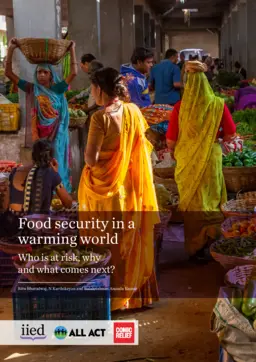
Pathways for global food security in a warming climate
23 March 2026
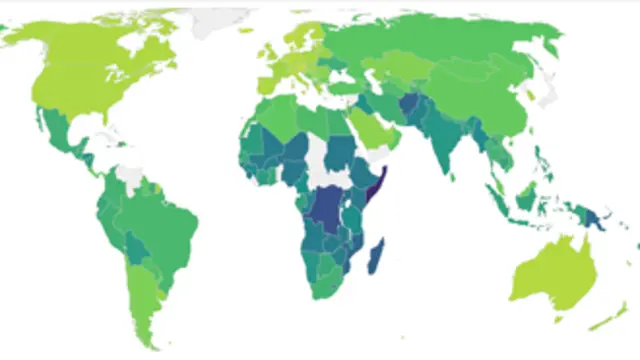
The world’s most comprehensive assessment of food security, this index covers 162 countries and measures availability, access, nutrition and resilience now and under 1.5, 2 and 4°C of global warming. The results reveal a world where economic wealth offers limited protection and where there is a stark climate injustice: the nations least responsible for emissions face the most severe collapse in their ability to cope.


Food insecurity is not evenly spread. While the global average score is 6.74/10, Iceland scores 9.26 at the top, and Somalia, at the bottom, is just 1.29
Under a 4°C warming scenario, the score for low-income countries is projected to decline by 42%. In contrast, developed countries are projected to see a decline of only 6% – despite being the most responsible for global warming
Each additional US$1,000 of GDP per capita adds around 0.2 points to a country’s food security score – but while higher GDP is strongly connected to better food availability and utilisation, economic growth alone doesn’t build resilience
None of the G7 members are ranked in the global top five; Germany had the highest global average: 8.86. The US saw the largest climate-driven drops at 1.5°C and 2°C (-0.20, -0.44)

Our researchers have extensive experience working with least developed countries and Small Island Developing States on the policies and practices that protect food systems under pressure. Contact us to find out more about the index or do a deeper dive into specific countries
Choose from four different routes into the index, including the opportunity to delve into the data and examine the methodology, plus the entire report
Climate change is increasingly undermining the foundations of food security in the world’s most vulnerable countries. For LDCs, this challenge is particularly acute. This analysis provides important new evidence on how climate risks are reshaping food security outcomes across countries

H.E. Ambassador Adão Soares Barbosa
Chair, Least Developed Countries Group of the UNFCCC
The real value of this index is that it shows not only which countries are at risk, but why – and crucially where to focus to alleviate the pressure on availability, access, utilisation or long-term resilience

Ritu Bharadwaj
Director of climate resilience, finance and loss and damage, IIED
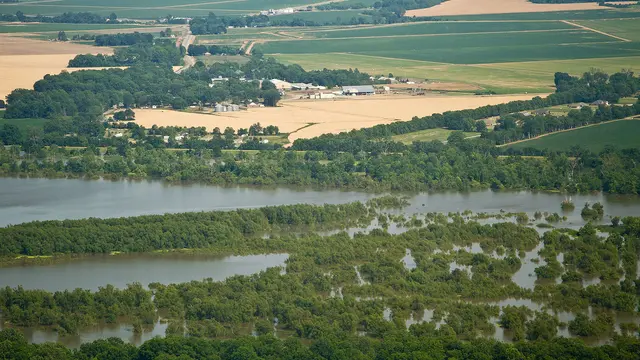
Even high-income countries with strong domestic food systems are not insulated from the effects of climate shocks. Worsening food security in poorer countries has knock-on implications for richer ones, and the mechanisms and structures are often invisible until a crisis hits
1
Climate shocks in one region can tighten global supply and amplify price volatility – as seen in wheat markets during the Ukraine disruptions and El Niño-linked crop failures. Even domestically food-secure nations are exposed to global price transmission.
2
Climate instability in major crop-producing regions creates systemic volatility, not just local scarcity. Interconnected supply chains mean that shocks propagate across borders, affecting availability and cost far from the source.
3
Climate shocks in poorer or more fragile countries can strain the wider economic and social stability of key trading partners. As food insecurity deepens, markets become less predictable, trade relationships more fragile, and disruptions more likely to worsen unrest or displacement – spreading beyond the country directly affected.