No inclusion, no solution: why water security needs a gender equality, disability and social inclusion lens
As pressure grows on diminishing groundwater reserves in the Souss-Massa region, which generates most of Morocco’s agricultural exports, Fair Water Footprints is catalysing collective action for shared water security.
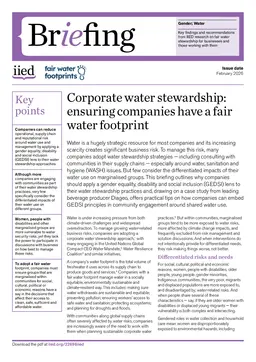
Women are central to water use and management in Morocco, yet are excluded from discussions around responses to the growing water crisis and have little say over decisions that affect their access.
The situation is even worse for people with disabilities, who face many barriers to accessing safe water. Other groups, such as young people and migrant workers, also face specific water security risks but lack decision-making power.
A gender equality, disability and social inclusion (GEDSI)-sensitive approach ensures that everyone’s needs are considered and allows for crafting sustainable solutions.
Cite this publication
Available at https://www.iied.org/22729iied