Understanding the wellbeing of displaced women and girls: gender-specific challenges in camps and cities
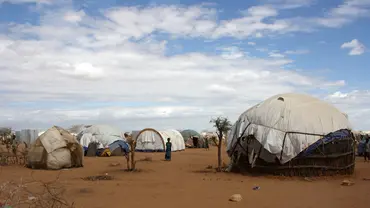
For decades, refugee camps have been the default response to mass displacement, regardless of concerns about their negative impact. Nonetheless, increasing numbers of refugees are bypassing camps to live in urban areas.
This paper provides a gendered analysis of qualitative and quantitative data on the wellbeing and livelihoods outcomes between refugees and internally displaced people (IDPs) in camps and urban areas in four countries, based on datasets produced by the four-year Protracted Displacement in an Urban World (PDUW) project.
The research focuses on refugees in Ethiopia, Jordan and Kenya and IDPs in Afghanistan, and produced survey and interview data from a city and a camp (or IDP settlement) in each country.
While the main purpose of this paper is to identify avenues for further, in-depth research, it does draw some preliminary conclusions from the analysis. This includes gender-specific challenges that women face in refugee camps, particularly around healthcare and physical safety.
Our analysis suggests that urban areas could provide more livelihood opportunities for displaced women, allowing them to achieve levels of wellbeing more aligned with those of displaced men. But urban life presents significant challenges for refugee and IDP women, who will require targeted support to overcome gender-specific barriers to their overall wellbeing.
Cite this publication
Available at https://www.iied.org/22631iied