Five-dimensional sustainability assessment: a tool for assessing if wild species use is sustainable, legal and safe

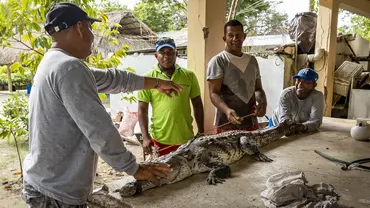
Billions of people across the world use wild species — for food, medicine, recreation and income, as well as a wealth of other purposes. It is estimated that between 3.5 and 5.8 billion people (between 40% and 70% of the world’s population) use thousands of wild plant, animal and fungus species and products in raw or processed forms.
It is central to the identity and culture of many Indigenous Peoples and local communities, and may also be central to the local and national economies of many countries. Unsustainable, over-exploitation of wild species is, however, one of the key drivers of biodiversity loss. It is therefore critical that use of wild species is sustainable.
Sustainability more broadly is commonly described with three dimensions: ecological, social and economic. For some, this three-dimensional view of sustainability is not enough. However, there is no straightforward way to determine if use, harvesting and trade is sustainable, safe and legal.
Nevertheless, those working in sustainability need an approach that cuts through the complexity, is accessible to conservation practitioners and policymakers, and aligns with the Kunming-Montreal Global Biodiversity Framework. To meet this need, a group of like-minded organisations collaborated to develop a novel five-dimensional framework for exploring wild species use. This toolkit provides details about the framework and how to apply it.
Cite this publication
Available at https://www.iied.org/22609iied