Primary

  • About
  • News and insight
  • Our approach
  • Publications
  • About
  • News and insight
  • Our approach
  • Publications
Sign up for our newsletters
  • Biodiversity
  • Climate change
  • Communication
  • Drylands and pastoralism
  • Economics
  • Energy
  • Fisheries
  • Food and agriculture
  • Forests
  • Gender
  • Governance
  • Land acquisitions and rights
  • Law
  • Monitoring, evaluation and learning
  • Natural resource management
  • Policy and planning
  • Poverty
  • Sustainable markets
  • Urban
  • Water

Secondary

  • Urban
  • Climate change
  • Biodiversity
  • Natural resource management
  • Food and agriculture
  • Sustainable markets
  • Policy and planning
  • Forests
  • Governance
  • Communication
  • Economics
  • Poverty
  • Monitoring, evaluation and learning
  • Land acquisitions and rights
  • Energy
  • Law
  • Gender
  • Drylands and pastoralism
  • Fisheries
  • Water

Search IIED

  • About
  • News and insight
  • Our approach
  • Publications
Sign up for our newsletters
  • Biodiversity
  • Climate change
  • Communication
  • Drylands and pastoralism
  • Economics
  • Energy
  • Fisheries
  • Food and agriculture
  • Forests
  • Gender
  • Governance
  • Land acquisitions and rights
  • Law
  • Monitoring, evaluation and learning
  • Natural resource management
  • Policy and planning
  • Poverty
  • Sustainable markets
  • Urban
  • Water

People

Marissa Van Epp

Marissa Van Epp's picture

Marissa Van Epp is a consultant for IIED

Insights

A community workshop. Social learning processes were a key element of a successful 10-year collaboration between the International Potato Centre (CIP) and indigenous communities in the Peruvian Andes (Photo: IIED)
It's the process, stupid 

Insight, 16 March 2017

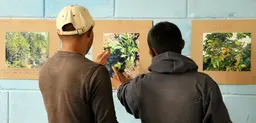
A CCAFS and CIAT participatory photography project in Chiquimula, Guatemala.  A framework on how to monitor and evaluate social learning approaches is now available. (Photo: Gian Betancourt/CIAT, Creative Commons via Flickr)
Paper outlines framework to monitor and evaluate social learning approaches

Insight, 13 February 2015

We have in the past few years made progress on the theories and understanding of social learning approaches. But more research and real-life case studies are needed (Photo: Z Sewunet (ILRI)
Paving the way for social learning in the climate change context

Insight, 24 March 2014

Publications

Preview of 17398IIED

Solving ‘wicked’ problems: can social learning catalyse adaptive responses to climate change? A compendium of case studies

01 March 2017

Preview of 10172IIED

Planning and implementing climate change responses in the context of uncertainty

01 December 2016

Preview of 10173IIED

Exploring the role of social learning in addressing climate uncertainties in district planning in Uganda

01 December 2016

Preview of 17390IIED

Solving ‘wicked’ problems: can social learning catalyse adaptive responses to climate change?

01 November 2016

Preview of 17569IIED

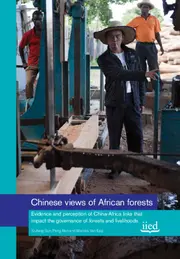
Chinese views of African forests: Evidence and perception of China-Africa links that impact the governance of forests and livelihoods

01 July 2014

Social learning and sustainable development

01 December 2013

Footer

  • News and insight
    • Insights
    • News
    • Events
    • In conversation
    • Podcasts
  • Our approach
    • Manifesto
    • Partnerships
    • Process
    • Impact
    • Hidden handbrakes
  • Publications
    • About publications
    • Accessibility
    • Privacy policy
    • Media centre
    • IIED Europe
  • About
    • Contact us
    • Raise a concern
    • Accountability
    • People
    • Jobs and internships
Subscribe to newsletters back to top

© 2026 International Institute for Environment and Development (IIED)

Accessibility Privacy policy Terms and conditions Cookie preferences