Items tagged:
Small-scale farmers
-
Agricultural contracts and farmer agency: a shift in perspective
Support initiatives should assist farmers’ own efforts to renegotiate trading relations, rather than assuming producers gain most from integration in agribusiness-led activities
-
Remembering Mary Tiffen, a drylands pioneer
Gill Shepherd reflects on the life of the late Mary Tiffen, who conducted groundbreaking research on the African drylands over three decades
-
No room for manoeuvre: debt prevents investing in the future
This case study highlights the challenges that farmers in Malawi face when trying to intensify their agricultural production. It focuses on smallholder farmers in the Mwansambo area of Central Malawi. Mwansambo and neighbouring areas are important food and cash crop producing regions. But despite decades of agricultural development interventions, farmers are still struggling to feed their families and invest in sustainable land management
-
Difficult choices: balancing competing priorities on Burkina Faso farms
The SITAM project looked at how to support progress towards sustainable intensification of agriculture in three African countries. This case study looks at how farming households in eastern Burkina Faso are balancing different priorities as they try to increase their productivity
-
Critical theme: Small-scale farming and the future of the European food system
Globally, small-scale farming is crucial for producing food and for sustaining the livelihoods of millions of people. In European food systems, the important but under-appreciated role of small-scale farmers is under threat from external drivers. On Wednesday, 22 January 2020, IIED hosted a critical theme event to discuss how small farms fit in the future context of the UK and European food system
-
Livelihoods Insurance from Elephants (LIFE) in Kenya and Sri Lanka
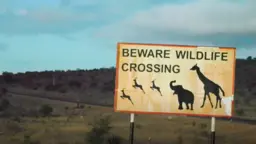
IIED is working to facilitate private markets to insure small-scale women and men farmers for damage caused by human-wildlife conflict, primarily from elephants. This will provide support for insurance in two countries, Kenya and Sri Lanka
-
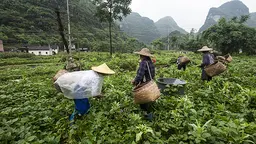
Nurturing the shoots of China's sustainable agriculture
A growing trend towards sustainable food offers hope for addressing environmental, social and food safety concerns associated with China's food system
-
A new kind of brew: smallholder coffee and carbon
Has shade coffee shed new light on the multiple benefits from improved agricultural systems? Ina Porras blends together a number of thoughts after a side event at the Global Landscape Forum
-
Star spice in Vietnam's forests
Business training for farmers in Vietnam is adding spice to their harvest – and encouraging them to form producer organisations to make more from their crop
-
Insuring farmers – adapting to climate change
Climate change is increasing the risks for farmers, but a new form of insurance may provide support
-
Organise to thrive
In the run up to the World Forestry Congress in September 2015, Duncan Macqueen highlights how Forest Farm Facility support to help groups organise is helping forest and farm producers in Guatemala
-
Sustainable agriculture in China: then and now
The environmental impacts of China's agricultural production affect not just China, but also the global environment. An IIED and China Agricultural University workshop explored examples and models that could help promote sustainable agricultural practices in China
-
Calling all energy and agriculture experts: meet, talk and collaborate
Many of the 500 million small farms that produce the bulk of food consumed in developing countries have no access to modern energy services. Why doesn't more research and innovation focus on getting energy to them?
-
Payments for ecosystem services: We can't leave people out of the equation
What's next for schemes that pay communities to protect local ecosystems? This is what leading researchers and practitioners in the field came together to discuss at IIED's conference in Edinburgh last week
-
Book charts path from harmful land grabs to people-centred investment in Africa
The time is ripe for a new approach to the large-scale land deals that ultimately connect millions of consumers and savers in rich nations with millions of poor rural farmers in Africa, says a new book by one of the world’s leading experts in such deals.
-
Small producer agency in the globalised market
What are the strategies and constraints of small-scale producers in an era of globalisation? This project has provided insights that can help in designing better policies and business interventions to support them.
-
Book urges new development agenda for small-scale farming
A three-year study of the ways small-scale farmers operate in Africa, Asia and Latin America has prompted calls for a major rethink of development and business interventions.
-
How small-scale farmers make markets work for them
Our new book shines light on how small-scale farmers are making their choices — about how to modernise appropriately, and about balancing costs, risks, benefits and uncertainties.
-
ELLA - sharing Evidence and Lessons from Latin America
Read how ELLA’s online Learning Alliances are sharing Latin American experience with sub-Saharan Africa and South Asia.
-
World Food Day: how do you keep co-operatives competitive?
The Food and Agriculture Organization's 2012 World Food Day focuses on co-operatives.This time around co-operatives need to be what the small-scale farmers actually want. Sometimes that means something quite informal.
-
Focus on small-scale farming: food or jobs?
The latest ‘provocation’ from IIED and Hivos, held in The Hague last week (24 May), began by asking what the development community can do to support rural youth. And for consultant Felicity Proctor, the answer is clear: “we need to move from agriculture and talking about food security and productivity to enterprise, business and a decent living for many of the rural populations.”
-
Responding to the realities of rural youth
Across the developing world, rural youth are turning their back on small-scale agriculture. Fed up with limited access to markets, assets finance and infrastructure in rural areas — and lured by the thought of better jobs elsewhere — young people are increasingly choosing a mobile livelihood, moving to and from bigger rural towns or cities and combining a series of income-generating activities, in both rural and urban areas.
-
Looking beyond land to support rural youth
This was one of the conclusions of participants at a provocative seminar ‘Rural youth today, farmers tomo
-
Provocation 6: Rural youth today, farmers tomorrow?
This seminar is the sixth in a series being initiated by the IIED /HIVOS Knowledge Programme: Small Producer Agency in Globalised Markets.
-
-
Small-scale producers in the globalised market
The Latin American Learning Network members of the Knowledge Programme ‘Small producer agency in the globalised market’ convened in Lima from 12 to 16 September. They organised and participated in a series of meetings and events in conjunction with various prestigious organisations. The highlight of the programme was the International Forum ‘Small-scale producers: Actors in Globalised Markets and Food Security?’ on 14 September, organised by the Pontifical Catholic University of Peru.
-
Corporate responsibility: what's in a name?
At the latest provocation from IIED and Hivos, held in Brussels last week (22 June), a group of around 60 policymakers, academics and development practitioners gathered to discuss, among other things, the role of CSR in achieving development goals such as poverty reduction and the empowerment of small-scale farmers.
-
Just how inclusive is ‘inclusive business’?
Discussion at the latest of the IIED-Hivos ‘provocations’ in Brussels last week (22 June) suggests that the first step in assessing how ‘pro-poor’ business contributes to development and smallholder empowerment, is to understand what we mean by the word ‘inclusive’.
-
Fair trade: still centred on smallholders?
To what extent do approaches such as fair trade, corporate social responsibility and inclusive business models allow the private sector to meet commercial objectives while also reducing poverty and empowering small-scale farmers? This was the question posed at the latest in a series of IIED and Hivos ‘provocations’ held at the European Parliament in Brussels last week (22 June).
-
Provocation 5: Pro-poor business, development and smallholder empowerment
The fifth in a series of seminars on markets and small-scale farmers took place in Brussels, Belgium on 22 June 2011. View video and reports from the event
-
Investing in smallholders and workers is good for business
Across the developing world, food systems and supply chains are changing — exports are rising, particularly in fresh foods, supermarkets are playing an increasingly important role and there is a growing number of standards for safety, ethics and environment.
-
Markets for the poor: the gap between theory and practice
Within development circles, there’s a common, if recent, mantra that the key to reducing poverty in the global South lies in investing in agriculture. Increasingly that investment focuses on building bridges between small-scale farmers and private markets in approaches known as ‘markets for the poor’.
-
NGOs: friend or foe to markets for the poor?
The latest ‘provocation’ seminar from IIED and Hivos, held in Paris last week (30 March), began by asking who are the contents and discontents of development approaches to make markets work for the
-
Provocation 3: Making markets work for the poor - contents and discontents
The third in a series of six seminars on markets and small-scale farmers took place in Paris, France on 30 March 2011.
-
Provocation 2: Rights-based versus market-based development
The second in a series of six seminars on markets and small-scale farmers took place in Stockholm, Sweden on 3 March 2011. Watch video of the event.
-
Provocation 1: Producer agency and the agenda to make markets work for the poor
The first of a series of ‘provocative seminars’ on smallholders and the ‘pro-poor markets’ agenda took place in The Hague, the Netherlands, on 28 September 2010
-
Making markets work for small-scale farmers? A series of ‘provocation’ seminars
IIED, Hivos and collaborating institutions organised a travelling series of ‘provocation’ seminars to challenge conventional wisdom on how to include smallholders in markets and bring fresh perspectives to the discussion on what works and why
-
Has agriculture been a winner in the economic downturn?
While the downturn has hit many economic sectors hard, have farmers prospered?
-
Global network to help African farmers navigate globalised markets
The network will gather producers, business people, nongovernmental organisations and others from across the global South to produce knowledge that can inform better policies and practices.