Paper walls: how visa barriers are silencing the global South on climate
International climate negotiations cannot be inclusive if key voices are missing. Yet every year, delegates from countries on the frontline of climate change are blocked from attending critical meetings in Germany. IIED is calling for fair visa access so all voices can shape the global climate response.



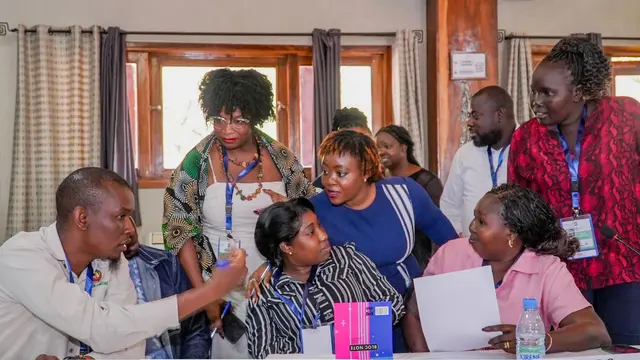
Members of civil society demonstrate against visa restrictions, saying that their participation is essential in the negotiations (Photo: IISD/ENB – Kiara Worth)
Every June, negotiators from around the world gather in Bonn, Germany, to lay the groundwork for the UN climate talks. These 'intersessional' meetings, held between the high-profile annual COPs (Conferences of the Parties), are where critical work happens: agendas are negotiated, draft texts refined and country alliances like the Least Developed Countries (LDC) Group coordinate its positions.
For smaller delegations, including the LDCs, Bonn is also when a new generation of negotiators is trained and mentored; this is often their first experience inside the negotiation rooms.
But for some, what could be a career-defining journey ends at the visa desk: a growing number of LDC delegates are held back by opaque and last-minute rejections.
This isn’t a new issue. As far back as 2008, IIED raised concerns about the exclusion of LDC voices. A 2022 Green European Journal piece called this “visa discrimination” (PDF); others have called it “visa colonialism”. In 2024, Climate Home News reported widespread visa refusals for global South delegates.
Recent decisions, like the European Union’s visa restrictions on Ethiopian nationals, show how migration politics spill into climate diplomacy. With no public data on how many delegates actually overstay their visas, such blanket restrictions are hard to justify.
The invisible border around the negotiation table
The climate crisis is global, but access to climate diplomacy is not. Visa barriers shape whose priorities make it into policy and are undermining the equity of the climate negotiations.
This is particularly true for LDC delegates travelling to Bonn, where the UN Framework Convention on Climate Change (UNFCCC) secretariat is based. Unlike COP host countries, Germany offers no special visa process for participants.
At COPs, the host government typically provides fast-tracked, free visas for UN-accredited delegates. In Bonn, LDC delegates must navigate the same visa system as ordinary travellers, often without the institutional support enjoyed by applicants from wealthier countries. Even delegates who have attended the Bonn climate talks numerous times can find themselves being rejected.
This issue isn’t unique to climate talks. A 2020 study (PDF) found that “conference inequity” could be mitigated by relocating meetings to visa-friendly countries, providing financial support for travel and investing in mentorship schemes.
Navigating inequity
For over a decade, IIED has been working to amplify LDC voices in global climate decision-making. Our comprehensive mentoring and training programme equips emerging leaders with the skills, experience and access they need to meaningfully participate in international climate negotiations.
Each year, 12 early-career negotiators, selected through a rigorous and highly competitive process, receive tailored training and mentorship from experienced negotiators and full financial support to attend at least two sessions of the UNFCCC negotiations. Beyond funding, we provide hands-on logistical support, including help navigating the complex visa application process.
These delegates are trusted representatives of their countries, nominated by their national heads of delegation and often work closely with senior members of their negotiating teams. Yet despite their qualifications and full documentation, visa barriers continue to undermine their participation.
Since 2022, an average of two IIED mentees per year have been denied visas for Germany – without a clear explanation. Some are rejected on the grounds of insufficient proof of purpose, even when they have supplied all required documentation.
The cost of a visa denied
The true cost of a visa refusal extends beyond the immediate disappointment of rejection, encompassing financial loss, emotional strain and logistical challenges.
Before a delegate submits a visa application, they have already invested significant time, money and emotional energy. The process is lengthy and complex. For those without an embassy in their home country, it can require travelling to another country to submit documents.
This may involve taking unpaid leave, covering travel and accommodation costs, and potentially waiting up to 16 days for a decision – all with no guarantee of success.
The process can be deeply stressful. Securing an appointment with visa officials can be a challenge. Added to that are the pressures of preparing for high-stakes negotiations, juggling work and family responsibilities, and navigating a system that can feel impersonal and intrusive – especially when it comes to the financial scrutiny applicants face due to mandatory submission of bank statements and supporting documentation. This can be particularly hard for female delegates, who face additional barriers, such as caregiving responsibilities.
There are immediate financial losses: non-refundable bookings and, in some cases, legal costs associated with appeals. For example, this year an IIED-sponsored delegate spent around US$3,000 travelling to another country to apply for a visa – a journey made necessary by conflict in her home country.
After her application was rejected, she remained there for over three weeks while her appeal was processed, incurring additional costs throughout. Despite submitting the documents previously deemed 'missing', along with a formal appeal letter, the appeal was denied. She never made it to Bonn.
The emotional toll can be just as heavy: visa rejection means exclusion from critical negotiations, lost professional opportunities and a blow to personal confidence. The psychological strain of uncertainty and the time spent on appeals detract from the focus and preparation required for international engagement.
Holders of 'strong' passports arrive at negotiations unburdened by such stress. This imbalance highlights a structural inequity in international spaces that are meant to be inclusive.
Organisations like IIED work hard to reduce these barriers. We provide comprehensive support to the delegates we sponsor, including documentation, financial aid, guidance through appeals and emotional support. But even with this dedicated assistance, visa refusals still happen.
The reality is that most people navigating these systems must do so without this level of logistical support and financial backing.
Another door closes
Until now, applicants refused a German visa could submit a ‘remonstration’ – an administrative appeal that, while cost-free, often took several months to resolve.
From 1 July 2025, this option will be scrapped. Instead, applicants will have to either reapply or launch a formal legal case – a process expected to last years and cost thousands. Yet another door is closing on LDC participants as we write.
Climate justice starts with equal access
IIED mentors new LDC negotiators and covers travel costs, but we can’t change where the talks are held or how visas are issued. Real progress requires, at a minimum, relocating the intersessional meetings to a more accessible country or reforming visa processes to match the COP model.
We call on Germany and other host countries to ensure fair, transparent visa access: clear explanation of rejections, visa facilitation for duly registered delegates and an appeal route that does not require costly legal action – particularly for visas that typically last only 90 days.
More fundamentally, we need a recognition that equal visa access is central to climate justice.