Too hot to work, too poor to rest
This event explored new research quantifying the health and non-economic impacts of heat stress on informal workers in India and Bangladesh.

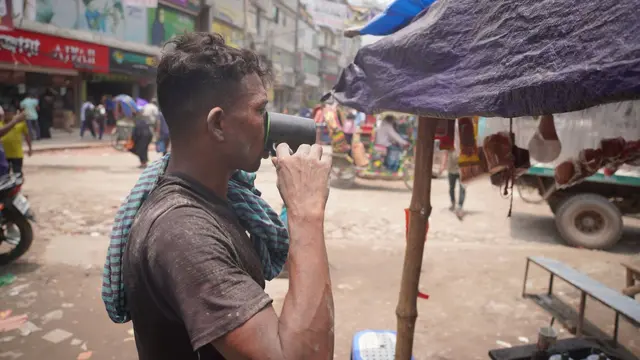
In Dhaka, many migrants turn to rickshaw pulling as a source of livelihood, enduring long hours of labour in the sweltering climate (Photo: copyright Md Riaz Uddin/OKUP)
Rising temperatures across South Asia are changing the conditions under which people work and live. Informal workers, who make up the majority of the labour force in the region’s cities, are among the most exposed and the least protected. They work long hours in the heat with little shade, water or rest, and they return to homes that offer no relief. The economic and human costs of this exposure are large, yet they remain largely uncounted in policy and in climate finance.
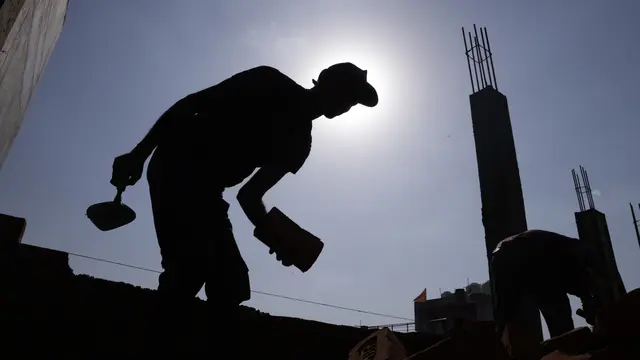
The study ‘Too hot to work, too poor to rest’ examines the health and economic impacts of heat stress on informal workers in four South Asian cities: Ajmer, Delhi and Agra in India, and Dhaka in Bangladesh. It surveyed over 700 workers across outdoor settings such as construction, road work, brick kilns and rickshaw pulling, and indoor settings such as garment, glass and small-scale manufacturing. The survey was supplemented by time motion studies, health risk scoring validated by local doctors, focus group discussions, key informant interviews and family case studies.
The analysis used IIED’s Comprehensive Climate Impact Quantification (C-CIQ) toolkit to measure both economic and non-economic loss and damage, applying an intersectional lens across gender, age, employment type and migration status.
The findings draw attention to three issues that much of the existing research overlooks:
- Indoor workers are as vulnerable as those working outdoors, even though far fewer studies examine their conditions
- Heat exposure does not end at the worksite: poor housing, sanitation, water and food mean that a worker who spends eight or nine hours labouring in the heat returns home to conditions that provide no respite, and
- The costs are more than economic loss and damage: heat stress carries significant non-economic and psychological harm that rarely appears in assessments.
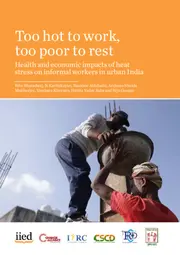
The research shows how heat stress creates a hidden cycle of loss that ranges from workers' daily earnings to their long-term health, and from the household to the wider economy. The full findings, and what they mean for productivity, human capital and GDP, will be presented at the launch.
The papers also set out recommendations for protecting workers and their incomes, including how compensation and insurance-based approaches compare.
Alongside the research, a video documentary was produced that captures workers' own accounts of living and working in extreme heat, and the solutions emerging in response. Two papers have been produced, one for India and one for Bangladesh, and the event launched both papers and the film.
The event was organised by IIED in partnership with OKUP, Change Alliance, Community for Social Change and Development (CSCD), Ideal Youth for Revolutionary Changes (IYRC), DISHA- Roman Catholic Diocesan Social Service Society (RCDSSS), DISHA Research Group, Labour Education Development Society (LEDS), and Uttar Pradesh Gramin Mazdoor Sangathan, Agra.
Speakers
- Ranjini Mukherjee, director - research, knowledge management and capacity development, Coalition for Disaster Resilient Infrastructure (CDRI)
- Dr. Archana Shukla Mukherjee, chief executive officer, Change Alliance, India
- Shakirul Islam, chairperson, Ovibashi Karmi Unnayan Program (OKUP), Bangladesh
- Madeleine Thomson, head of climate impacts and adaptation, climate & health, Wellcome Trust
- Claire Harbron, chief executive officer, Howden Foundation
- Joan Pegram, global policy lead, climate, environment, energy, DRR Section, UNICEF
- Ritu Bharadwaj, director, climate resilience, finance and loss and damage, IIED
Coverage
Extreme heat is acting as a 'poverty multiplier' for hundreds of millions of workers in India’s informal sector, wrote the Guardian, saying the research shows how "extreme heat is pushing some of India’s poorest workers further into poverty, with income losses of up to 9% for outdoor workers".
IIED estimated extreme heat was costing workers US$78 billion in lost wages, the equivalent of 2% of India's GDP every year.
A full recording of the event in English is available below and on IIED's YouTube channel, where there are also timestamped links to each of the speakers' contributions.
IIED events newsletter
Sign up to our mailing list for updates and invitations to events throughout the year, including webinars, critical themes and debriefs.
Contact
Larissa Schneider-Kim ([email protected]), internal communications and events manager