Promoting agroecological productivity through smallholder management in northern Tanzania
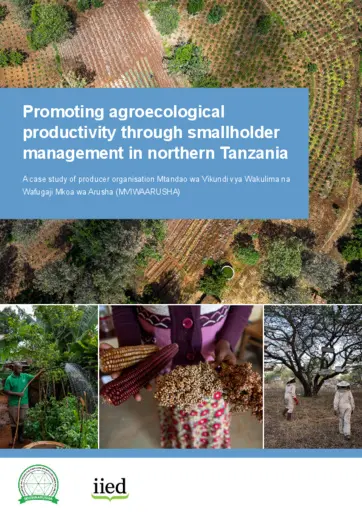
Land use in northern Tanzania is divided into two major categories: agricultural land specified for growing food and cash crops; and conservation areas.
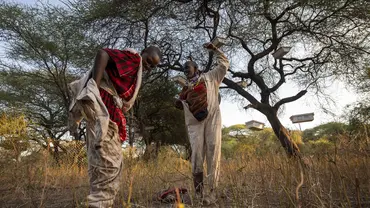
This case study explores the work of the forest and farm producer organisation Mtandao wa Vikundi vya Wakulima na Wafugaji Mkoa wa Arusha (MVIWAARUSHA), which works to promote agroecological productivity in the region in both agricultural and forest landscapes.
MVIWAARUSHA represents almost 12,500 smallholder farmers organised into 446 local groups. The network organises and supports its members in policy advocacy, agroecological productivity, the development of financial services and marketing, and promotes the effective mobilisation and management of the networks’ resources.
The organisation envisions a strong rights-based and socioeconomic network of empowered farmers and pastoralists achieving sustainable livelihoods from agriculture and animal crops.
An earlier version of this study was published in 2023 under the Forest and Farm Facility. This updated version includes additional research on finance strategies for diversified production.
Cite this publication
Available at https://www.iied.org/22691g