Conserving Ikalahan agrobiodiversity and promoting sustainable agriculture in the Philippines
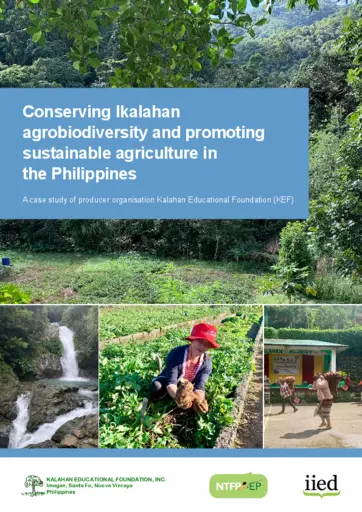
The historic governance of the Indigenous Ikalahan (or Kalanguya) people is based on customary laws and practices, including sophisticated forest management, wild-food harvesting protocols and agroforestry systems.
This case study shares the findings of research by the Kalahan Educational Foundation among farmers from Indigenous Ikalahan communities of the Cordillera and Caraballo mountain ranges in Northern Luzon in the Philippines.
The research consisted of interviews with 40 farmers to assess the agrobiodiversity grown by the Ikalahan communities and the strategies used by the farmers to maintain it. The participating farmers included ten women and ten men using traditional farming practises, and ten women and ten men in commercial farming settings.
The findings show that, while pressures of modernisation and the need for cash income have introduced a shift from purely subsistence models to more commercial farming models, agrobiodiversity is still high in both approaches used by Ikalahan farmers.
Cite this publication
Available at https://www.iied.org/22690g