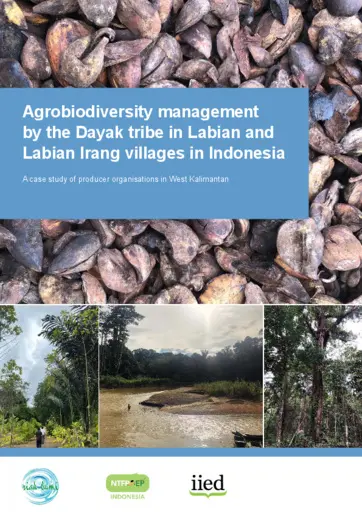
Agrobiodiversity management by the Dayak tribe in Labian and Labian Irang villages in Indonesia
The Dayak peoples have extensive traditional knowledge about the management and use of local biodiversity, practicing holistic and regenerative farming that emphasises harmony with nature and the preservation of biodiversity.
This case study shares the findings of research by the Non-Timber Forest Products — Exchange Programme (NTFP-EP) and Riak Bumi Foundation in Labian and Labian Ira’ang villages in Batang Lupar district of West Kalimantan in Indonesia.
The research consisted of interviews with 20 farmers (ten women and ten men) to assess the agrobiodiversity grown in these villages and the strategies used by the farmers to maintain it.
The findings show how both women and men farmers grow a variety of cash and subsistence crops, as well as managing livestock and fishing. In addition, they also harvest non-timber forest products such as wild fruits and medicinal plants under customary management and community-forest arrangements, helping buffer against crop failures caused by floods or other challenges, and providing economic resilience.
This case study also shows the critical role of forest and farm producer organisations in building local resilience by sustaining agrobiodiversity, fostering sustainable enterprises and enabling access to financial resources.
Cite this publication
Available at https://www.iied.org/22689g