This will mean driving change internally that has included a redefining of our shared values and continuous work on behaviours and culture. Externally, this includes transforming ways of working with others, how we set our research agendas, take action in policy and in practice, and how we communicate.
To understand and confront the manifestations of racism within IIED and the sustainable development sector more broadly, we formed an internal working group, and in May 2021 we launched a workplan. In December 2021 we issued an external statement to provide an update on our journey towards becoming an anti-racist organisation and the workplan actions. This was accompanied by a blog by then IIED director Andrew Norton.
In April 2022 the institute published a case study, 'Discomfort to discovery: exploring racism and anti-racism in development narratives', that explored how far IIED's written content acknowledges or omits historic patterns of enslavement, colonial exploitation, present-day racism and coloniality, and includes an evaluation and roadmap for change.
In January 2023 the institute shared the findings of an internal race audit with staff, conducted by a third party expert organisation in the months leading up to that date. There are 18 recommendations contained in that audit.
In May 2024 IIED published its new strategy 'A manifesto for a thriving world'. Within that manifesto are new values, embedded processes and governance structures intended to further progress IIED towards becoming an anti-racist organisation.
In June 2024 IIED shared an update both internally and externally on the progress made against the audit's 18 recommendations and a comprehensive summary of the findings of the race audit (PDF) itself.
And in April 2025 a briefing was published exploring decolonisation and its implications for IIED, summarising eight key insights from a series of internal talks by Indigenous and grassroots partners, peer organisations and majority-world thinkers who provided feedback on how the institute can decolonise its research programmes and become anti-racist.
The speakers identified the need to challenge mainstream development and environment paradigms and research agendas as White supremacist constructs; to co-create alternatives with Indigenous and grassroots partners; and to shift decision-making power and funding to the grassroots.
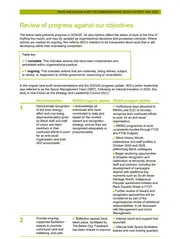
IIED committed to sharing regular updates on progress on the 18 recommendations contained in the race audit, and additional progress made towards becoming an anti-racist organisation.
And in June 2026 it published an update, prepared by IIED’s race and racism working group, on the organisation’s continued response to the audit recommendations, reflecting on the implementation, experimentation, learning and organisational change since 2024. This outlines progress made, emerging challenges and the next steps needed to strengthen governance, accountability and long-term institutional transformation.
This was accompanied by an article by executive director Tom Mitchell reflecting on the progress IIED has made on the recommendations and the institute's journey towards becoming an anti-racist organisation.