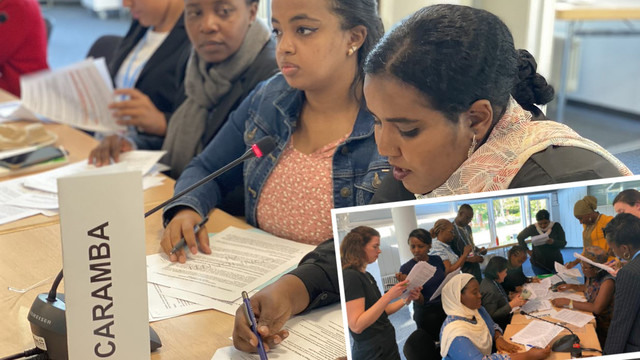
News Applications sought for Saleemul Huq memorial scholarship and award for loss and damage research 16 April 2024
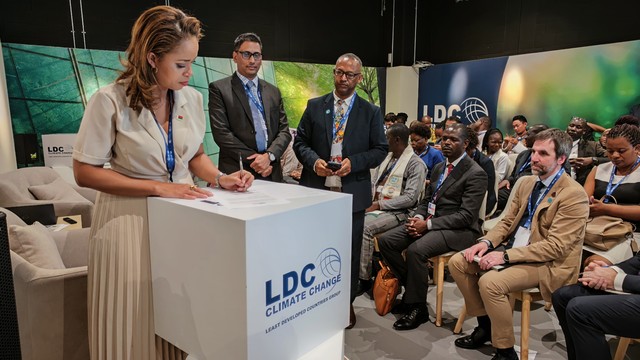
News LIFE-AR at COP28: new commitments accelerate efforts for climate adaptation and resilience in the least developed countries 20 December 2023
Insight ‘Historical’ COP28 outcomes nowhere near enough for least developed countries Anna Schulz and Yamikani Idriss 15 December 2023
Insight Building political ambition for adaptation at COP28 and beyond UnaMay Gordon 01 December 2023
Stepping up global ambition for climate action and justice A programme of work showing how IIED is supporting the most vulnerable countries to increase global ambition to stay below 1.5°C Collection
UN climate change conference (COP26) A series of pages related to IIED's activities at the 2021 UNFCCC climate change summit in Glasgow Event
Applications sought for Saleemul Huq memorial scholarship and award for loss and damage research News, 16 April 2024
Piloting climate-smart development planning for local government in Ethiopia: lessons learned from the BRE programme Publication, 04 March 2024
LIFE-AR at COP28: new commitments accelerate efforts for climate adaptation and resilience in the least developed countries News, 20 December 2023
‘Historical’ COP28 outcomes nowhere near enough for least developed countries Insight, 15 December 2023
Actions after impacts: non-party stakeholders delivering solutions to address loss and damage Event on 06 December 2023