Business models for sustainable development
Market-based activities are now recognised by governments, business and development agencies round the world as potential solutions to major sustainable development challenges – reducing poverty, enhancing livelihoods, protecting ecosystems, tackling climate change, and meeting the Millennium Development Goals.
Increasingly, the private sector is recognising an emerging business opportunity in designing or modifying business models specifically to address such issues. But to date this evolution has been patchy and ad hoc. Many innovative pilot initiatives have succeeded at a micro-level but crucially failed to achieve success at scale.
See our Overview briefing paper: Business models for sustainable development: innovation for society and environment
What are business models for sustainable development?
At the centre of any business model is the company’s ‘value proposition’ — the products and services that yield tangible results for the company’s target customers. A company’s value proposition distinguishes it from its competitors.
Two broad areas for possible adaptation and innovation of a business model are production and marketing. The production side comprises the set of activities, mechanisms and relationships for providing a good or service — in other words, ‘creating value’. The marketing side comprises the activities, mechanisms and relationships for selling that good or service — in other words, ‘capturing value’.
Business models for sustainable development aim to deliver economic, social and environmental benefits – the three pillars of sustainable development – through core business activities. In these models, the value proposition includes social, environmental and economic values, while value distribution within the whole market chain is a key feature.
Key factors of success
Our research has identified a number of factors that contribute to the success of business models for sustainable development:
- Businesses need to build their own capacities and strategic alliances with other enterprises, government agencies and development practitioners.
- Involving local communities as partners and co-designers of new models enhances local buy-in and ownership.
- Business models for sustainable development need to be self-sustaining in the long term. However, significant investment of time and resources at the start is key for successful innovation and scale-up.
- Trade-offs among different sustainable development goals – economic, social, environmental – need to be recognised and addressed.
- Ongoing monitoring and evaluation need to be built in to the business model.
Our work on business models for sustainable development cuts across several areas of IIED’s research:
Forestry
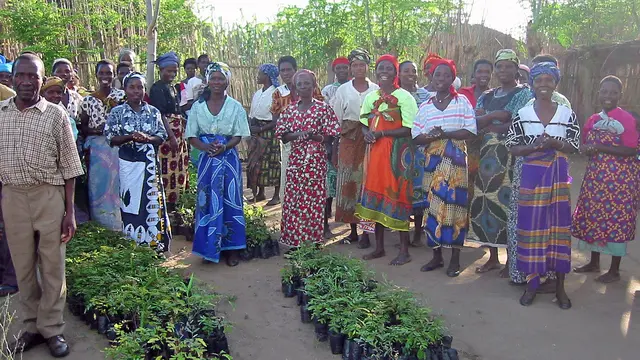
Small-scale forestry was for years half-lost in the shadow of industrial logging. Now, as forests become flashpoints for conflict and a focus for climate concerns, community forestry could be coming into its own. Collective ownership and strategic alliances, for instance, make for sustainability and cooperation.
The second briefing in IIED’s ‘Business models for sustainable development’ series, reveals how forest communities round the world are creating new business models that work: Roots of success: cultivating viable community forestry
Food and agriculture
Two major IIED projects in the food and agriculture sector relate to business models for sustainable development. These are:
- Small Producer Agency in the Globalised Market: This is a joint project with Hivos and a global learning network to map, elicit and integrate knowledge on the dilemmas confronting small-scale producers from the globalisation of markets. It works with different actors to bring new voices, concepts and insights into the global debate. The Programme thereby seeks to support smallholders and their organisations to position themselves and make effective choices in the face of this complex agenda, and support the development community and businesses in their search for better informed policies and practices.
- New business models for sustainable trading relationships: This is a collaboration between the Sustainable Food Lab (SFL), Rainforest Alliance, IIED, Counterpart International, CIAT, and Catholic Relief Services. Its aim is to engage civil society, farmers and private sector partners through the value chain to develop and implement new business models that enable small-scale farmers to participate in durable and stable trading relationships with food companies and thereby improve their livelihoods.
Energy
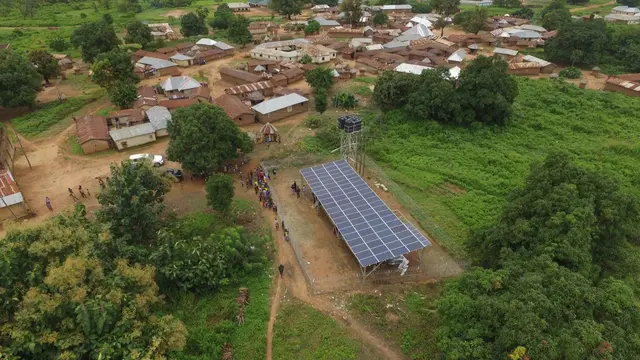
Our work on business models for sustainable development ranges across hydrocarbon and renewable energy, from responsible supply chain practices and social investment by multinational oil and gas companies, to commercial biofuel production, to decentralised energy provision for low-income communities.
- SUNGAS (Sustainable Utilisation of Nigeria’s Gas and Renewable Energy Resources): This project has been conceived to deliver access to modern energy services in the Niger Delta via small-scale community-based initiatives. The immediate objective is to catalyse the development of natural gas and renewable energy markets and sustainable community-based energy service facilities. This will be achieved through policy reform and by demonstrating that alternative community-based energy facilities can provide sufficient power for meeting rural and urban community needs. See also Brian Shaad and Emma Wilson’s report Access to Sustainable Energy: What Role for International Oil and Gas Companies? Focus on Nigeria
- Towards good practice in the oil and gas contracting chain: A joint project with WWF, SustainAbility and Engineers Against Poverty in 2007-8 sought to assess environmental and social issues related to supply chain management in the oil and gas sector in Kazakhstan and the Russian Arctic. For more information, see our discussion paper
- Biofuels, land access and new business models for rural livelihoods in Africa: Joint project with Centro Terra Viva Mozambique and Tanzania Forest Working Group. It documents impacts of commercial biofuels developments on land access for poorer groups and assesses the performance of different business models in delivering positive outcomes for rural development and economic sustainability.
- Power to the Poor: Sustainable energy at the base of the pyramid
by Emma Wilson and Lyuba Zarsky is an IIED briefing paper discussing new business models for providing access to sustainable energy for the poorest people.
Water
As part of our business models series, Engineers Against Poverty have contributed an analysis of private sector involvement in urban water provision. This focuses on two case studies: the Manila Water Company’s Water for Poor Communities (TPSB) Programme and the Water & Sanitation for the Urban Poor (WSUP) Partnership. The two models share common elements of innovation: a multi-sector approach to service expansion and provision, including partnerships with local authorities; strong community involvement in option selection, design and operation; appropriate service levels to reduce costs; and flexibility in the type of service provided. These models could be replicated in other cities, whilst acknowledging that their success will depend upon strong regulatory frameworks, a supportive government, and target populations that have sufficient income levels for business initiatives to be commercially viable.
Information and communication technologies
A decade ago it was dubbed the ‘digital divide’. Now, the gap in information and communications technologies (ICTs) between North and South is slowly shrinking. The developing world accounts for two-thirds of total mobile phone subscriptions, and Africa has the world’s fastest growing mobile phone market. By gaining a toehold in affordable ICTs, the poor can access the knowledge and services they need, such as real-time market prices, to boost their livelihoods. But to be sustainable, technologies need to factor in social realities. These include how people already share knowledge, and adapt to introduced technologies: mobile phones, for instance, confer status but can eat into much-needed income. Many development agencies opt for technology-led solutions that fail to ‘take’. Participatory approaches that keep development concerns at their core and people as their central focus are key.
See Ben Garside’s briefing paper: Village voice: towards inclusive information technologies
Role of NGOs, trade associations and donors in markets
Our work on business models for sustainable development draws on work that IIED undertook previously in collaboration with Practical Action and Oxfam relating to the role of NGOs, trade associations and donors in markets.
Two workshop reports are available:
- Workshop 1: NGOs as Market Actors: Roles and responsibilities in supporting small producers in low-income countries
- Workshop 2: NGOs, Business and the Challenges of ‘Scaling Up
Additional resources
- Engineers against Poverty Channels for Change: Private Water and the Urban Poor
- Wilson & Zarsky Power to the Poor: Sustainable energy at the base of the pyramid
- Fair Ideas session - Business models for sustainability
- Donor Committee on Enterprise Development
- International Finance Corporation, International Business Leaders Forum and Harvard University work on Business Linkages
- Philips’ Philanthropy by Design
- Prahalad and Hart (2002) The Fortune at the Bottom of the Pyramid
- UNDP’s Growing Inclusive Markets
- UNEP/Wuppertal Institute’s Human Development through the Market
- USAID's Microenterprise Learning Information and Knowledge Sharing (MicroLINKS) platform
- World Business Council for Sustainable Development/Netherlands Development Organization (WBCSD/SNV) Inclusive Business