Taking the long view on adaptation
The impacts of climate change do not happen overnight but play out over decades. Funders looking to support people to adapt to those impacts must take the long view and accept that their investments may not provide measurable outcomes for ten years or more.

You could perhaps be forgiven for feeling a little despondent about this year’s global climate talks in Durban if you only focused on the formal negotiations among the two thousand or so official delegates, who have been talking about the climate change problem with solving it for nearly two decades.
But the conference of parties (COP) of the UN Framework Convention on Climate Change (UNFCCC) is much more than official negotiations about COP decisions (see UN climate negotiations video update: "Good COP vs bad COP"). Every year, many thousands of people attend the COP to share information and network among groups with shared interests. They may not gain entry to the formal negotiating rooms, but they host and attend side events both within the COP premises as well as outside it. These side events now run into the hundreds, and provide a forum for airing and sharing experience and expertise, as well as practical solutions and actions for tackling climate change through both mitigation as well as adaptation.
Over the past two weeks in Durban, I have attended several very interesting side events on the issue closest to my heart, adaptation. These have covered a range of topics and scales, from planning to practice, from local to national; and there has been an impressive flowering of actions and learning on the subject in Durban, emphasising the positive aspects of these side events.
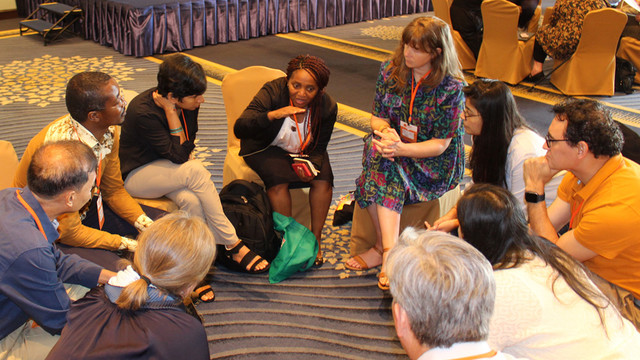
IIED holds one such major two-day side event each year in the middle weekend of the two-week long COP, called ‘Development and Climate Days at COP’. This year's event, held on 3rd and 4th of December focused on ‘evidence-based adaptation decision-making’ and had some excellent presentations, and even better discussions among the more than two hundred people who attended the event.
A key aspect of adaptation that was highlighted again and again in these discussions is monitoring and evaluation (M&E). Several conceptual frameworks as well as tools and manuals for M&E of adaptation were presented and debated.
My sense is that much of this push for M&E frameworks and manuals is driven by the demands of donors, who wish to fund adaptation but require solid ways to monitor and evaluate the benefits and effectiveness of their investments. A significant question these donors want answered is: "what distinguishes adaptation projects, programmes and interventions from regular development ones?"
While researchers and M&E experts struggle to answer this very valid question, I would like to offer prospective funders of adaptation projects and programmes some food for thought. Human-induced climate change is likely to unfold over the next ten to twenty years. This means that the outcomes of any investments made now will not be apparent — and so capable of being evaluated — for at least another decade. Unless donors take the long view and commit to funding programmes for at least ten years, they cannot aspire to fund adaptation to climate change. For short-term investments covering three or even five years, the best they can hope for is to support adaptation to climate variability.