Climate change negotiations

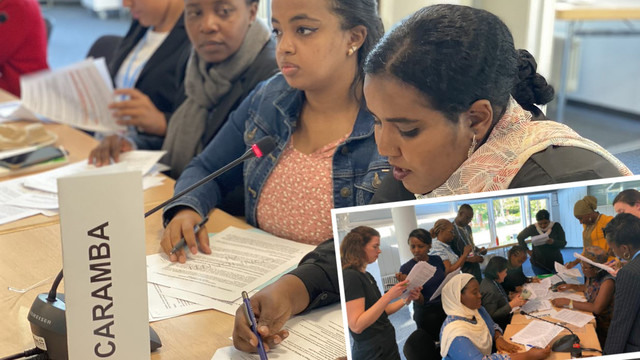
Plenary discussions, Bangkok climate change talks. Photo: UNclimatechange
Article
IIED helps vulnerable developing countries to achieve more equitable outcomes at global climate change negotiations. We help build strong negotiating positions through compelling evidence and by strengthening countries’ ability to negotiate. Our capacity building support also helps developing countries wanting to ‘domesticate’ global decisions on climate change, driving individual national climate change policies and actions that run alongside international collective action.
Climate protestors in Doha. Photo: adopt a negotiator
Article
What are the major outcomes from the climate talks and what does it all mean for developing countries most vulnerable to the effects of climate change? We spoke with Saleemul Huq, Senior Fellow with IIED's climate change group, for his analysis.
Climate protestors in Doha, Qatar.
Blog entry
The latest round of UN climate change negotiations – the COP18 conference in Doha – made only modest progress. Set against the elephantine size of the global climate problem, this achievement looks like a mouse.
Climate protestors in Doha. Photo: adopt a negotiator
Article
What is happening at the Climate negotiations in Doha and what might the developments mean for countries most vulnerable to the impacts of climate change? We spoke with Saleemul Huq, Senior Fellow with IIED's climate change group, for his analysis on recent developments.
Blog entry

What happens when 150 climate-change communicators get together to talk about their craft?

We found out when Internews’ Earth Journalism Network and the International Institute for Environment and Development organised the first Climate Communications Day (full programme here) as a side event at the UN climate change conference in Durban, South Africa.

Blog entry

In the COP17 side events “we see a lot of hope, solutions and activities at the side events of a positive nature which completely bely the negative vibes coming out of the negotiations themselves,” says Saleemul Huq, IIED’s Senior Fellow in the Climate Change group.


Blog entry

Millions of people around the world, including climate change negotiators, follow the domestic political scene in the US, and most of them have by now realized the current Administration’s predicament of facing an antagonistic Congress that will essentially block everything they try to do, domestically, and certainly internationally.

Article

With deforestation and forest degradation being the third largest global contributor to greenhouse gas emissions, forests have an enormous role to play in any attempts to combat climate change. An international scheme called REDD+ (Reduction of Emissions from Deforestation and Forest degradation, conservation, sustainable forest mangement and enhancement of carbon stocks) offers a financial incentive to keep trees standing and reduce global greenhouse emissions. Our workshop on 27 November shared perspectives on how we can make REDD+ deliver for people who depend on the forests.

Article

Development and Climate Days are critical for people interested in learning about the latest in climate change and international development and for building contacts with key policymakers, researchers and negotiators from around the world. Please register to participate in this event.

COP17
Article
Negotiators from nearly 200 governments are in Durban, South Africa for crucial talks towards a new global agreement on how to tackle climate change. The fate of the Kyoto protocol – the only agreement that legally binds countries to reduce emissions of greenhouse gases – hangs in the balance, as its first commitment period expires in 2012.

Pages

Subscribe to RSS - Climate change negotiations