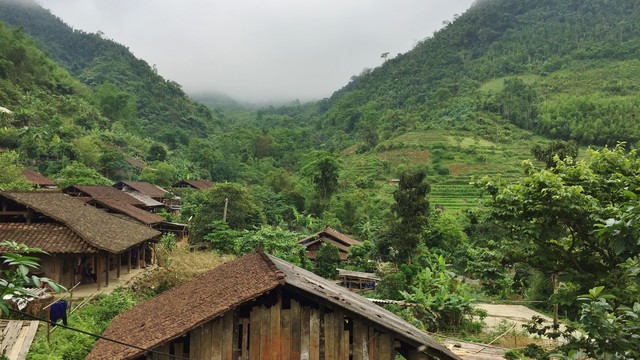
Sustainable tourism in the Srepok Wilderness Area, Cambodia
A wildlife ecotourism initiative in Southeast Asia led by IIED and WWF in Cambodia aimed to help local people as well as endangered animals.
A serious decline in species populations in the last few decades due to unsustainable harvesting and habitat loss prompted urgent action from the Cambodian government, WWF and other local partners to address this trend.
These groups, along with IIED, identified high-value low-impact wildlife ecotourism as a means of securing the future of species such as elephants, tigers and wild water buffalo and their ecosystem, through generating financing for conservation activities and supporting local livelihoods as well as ensuring the financial sustainability of the protected area.
The project, led by WWF Cambodia, was designed under the premise that the local communities that are dependent on the use of natural resources within the Srepok Wilderness Area (SWA) are some of Cambodia’s poorest. Also, these communities represented the best chance for genuine conservation of key species within the SWA, knowing the species, the area and their own poverty reduction needs.
Communities were unwittingly part of the problem, over-harvesting species and degrading the ecosystem within the SWA so that key species could not persist. Therefore, the project aimed to build awareness, and to create the environment necessary to make sure that costs of avoiding harvesting and other environmentally damaging activities would at least be balanced with the benefits received from other sources.
What IIED did
Community-based monitoring
A key component of the project was monitoring wildlife numbers, and involving local communities in this activity.
The original Darwin Initiative-funded project successfully piloted community-based monitoring in the 3,500 km2 SWA. Its success led to calls from the Cambodian government and NGOs for replication in other protected areas.
Another success was a Management-Oriented Monitoring System (MOMS) pilot led by community rangers in SWA which clearly showed potential replicability throughout the region. MOMS is a devolved monitoring process that helps to develop community-based monitoring teams able to carry out this work independently. It also has potential to build stronger local support for conservation activities.
Work then began to build on the project's initial success to scale up work in SWA and expanding activities into the Eastern Plains Landscape (EPL) of protected areas and biodiversity corridors. This was as part of an ecosystem approach that aimed to safeguard 15,000km2 of globally important tropical dry forest habitat in Cambodia.
Building capacity for ecotourism
This project expanded capacity-building through the provincial Wildlife Ecotourism Management Board (WEMB), one of the key outputs of the initial Darwin Initiative project. The WEMB was comprised of government, community, private sector and NGO representatives, and chaired by the provincial governor.
Its main function was to guide the development of sustainable ecotourism projects inside protected areas and in other high biodiversity value areas across the EPL.
The long-term aim was to develop a community tourism homestay initiative and environmental awareness and education activities – improving the capacity of Cambodian government and communities to benefit from sustainable management of globally significant biodiversity.
The first step in this process was the opening of a new eco-resort in Dei Ey village, in Mondulkiri Protected Forest, in 2009. This was the first of its kind in Cambodia, promoting ecotourism as a sustainable livelihood in fragile natural habitats.
Publications


Additional resources
Ecotourism and PA Management in Nepal: experiences and lessons learnt, Srepok Wilderness Area Project Team (2007), WWF/IIED Project material
WWF Greater Mekong Cambodia Country Programme Ecotourism Feasibility Study, Sharee Bauld (2007), WWF/IIED Project material
WWF Greater Mekong Cambodia Country Programme MIST Specialist – Evaluation Report, Sandrine Pantel(2007), WWF/IIED Project material
Feasibility for a community-based wildlife monitoring system for the Srepok Wilderness Area Project in the Mondulkiri Protected Forest, Cambodia, Richard Diggle (2006), WWF/IIED Project material
Community based forest management, Muyeye Chambwera (2011), IIED Reflect & Act
Poster for Mondulkiri Protected Forest, part of the SWA project – future developments, Srepok Wilderness Area Project Team (2007), WWF/IIED project material
Poster for Mondulkiri Protected Forest, part of the SWA project – general information, Srepok Wilderness Area Project Team (2007), WWF/IIED project material
Poster for Mondulkiri Protected Forest, part of the SWA project – activities and accomplishments, Srepok Wilderness Area Project Team (2007), WWF/IIED project material (Kymer and English)
Poster – Key wildlife species of Mondulkiri Protected Forest, Srepok Wilderness Area Project Team (2007), WWF/IIED Project material
Information flow diagram for rangers in Mondulkiri Protected Forest, WWF Cambodia, IIED (2009), WWF/IIED project material (Kymer)
Mind map for community rangers, Cambodia, WWF Cambodia, IIED (2009), WWF/IIED project material
Ecotourism brochure, Olga Van der Pol (2010), WWF Project material
Video: Mondulkiri wild honey (2011)
Video: Green fields of Mondulkiri (Khmer) (2011)
Video: Mondulkiri Protected Forests: the making of a protected area (2011) (English | Khmer)